Never-before-seen images of the moon from the farthest distance from Earth ever travelled
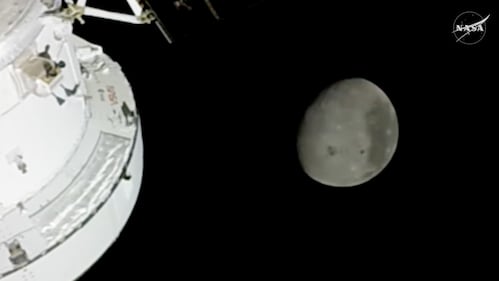
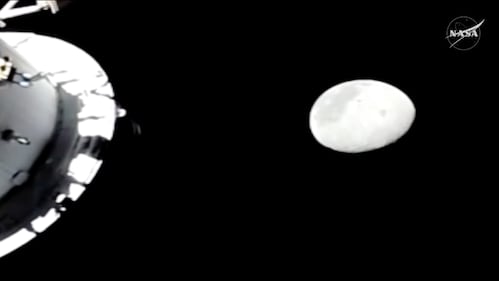
The Moon is seen from a camera outside the Orion Spacecraft after the Artemis II astronauts surpassed the farthest distance ever travelled by humans from Earth.
Updated:
Published:
Image 0 of 23
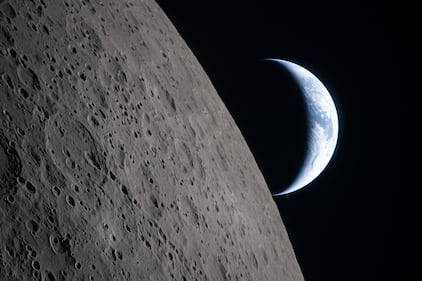
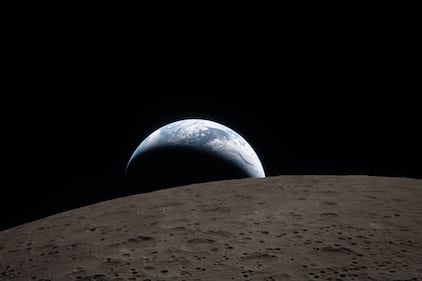
In this image provided by NASA, the Artemis II crew captured this view as the Earth sets behind the Moon during a lunar flyby, Monday, April 6, 2026. (NASA via AP)
In this image provided by NASA, the Artemis II crew captured this view as the Earth sets behind the Moon during a lunar flyby, Monday, April 6, 2026. (NASA via AP)
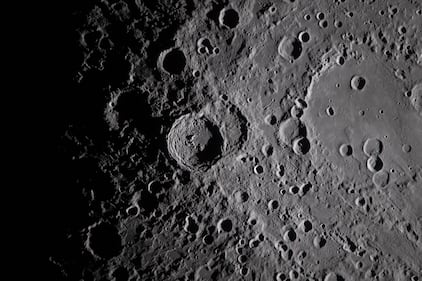
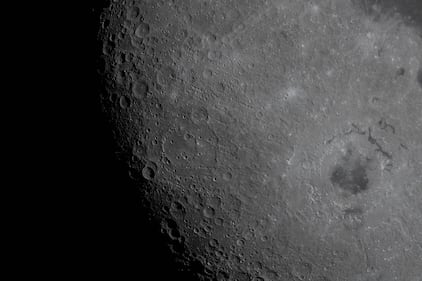
In this image provided by NASA, the Artemis II crew captured this image of the Vavilov Crater on the Moon during a lunar flyby, Monday, April 6, 2026. (NASA via AP)
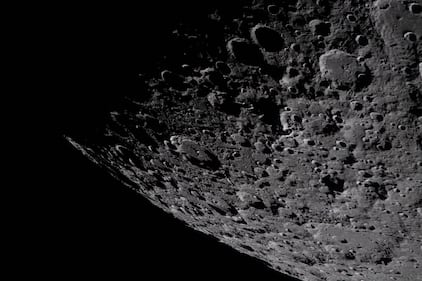
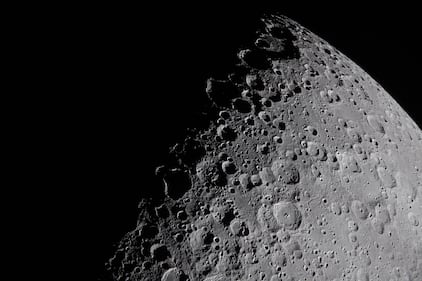
In this image provided by NASA, the Artemis II crew captured this image of the heavily cratered terrain of the eastern edge of the South Pole-Aitken basin of the Moon with the shadowed terminator – the boundary between lunar day and night during a lunar flyby, Monday, April 6, 2026. (NASA via AP)
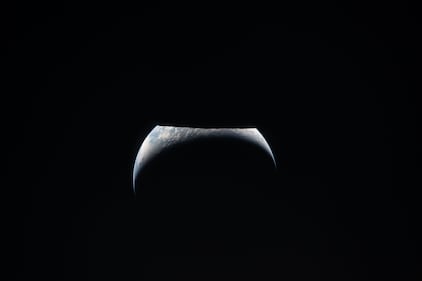
In this image provided by NASA, the Artemis II crew captured this image of a portion of the Moon coming into view along the terminator, the boundary between lunar day and night, during a lunar flyby, Monday, April 6, 2026. (NASA via AP)
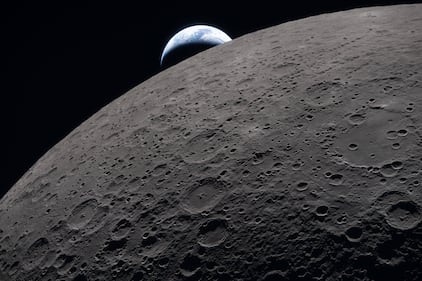
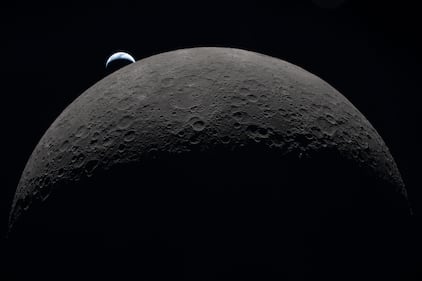
In this image provided by NASA, the Artemis II crew captured this view as the Earth moves out from behind the Moon, top, during a lunar flyby, Monday, April 6, 2026. (NASA via AP)
In this handout image provided by NASA, Earthset captured through the Orion spacecraft window at 6:41 p.m. EDT, April 6, 2026, during the Artemis II crew’s flyby of the Moon. (NASA via Getty Images)
In this handout image provided by NASA, Earth sets at 6:41 p.m. EDT, April 6, 2026, over the Moon’s curved limb in this photo captured by the Artemis II crew during their journey around the far side of the Moon. (NASA via Getty Images)
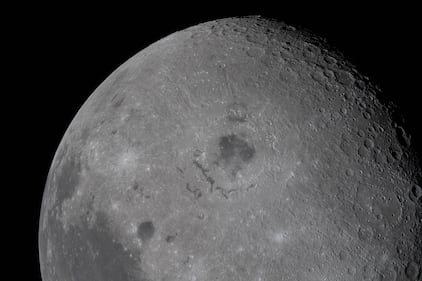
In this image provided by NASA, the Artemis II crew captured this image of the Orientale basin, a round crater with a black patch in the center, on the Moon during a lunar flyby, Monday, April 6, 2026. (NASA via AP)
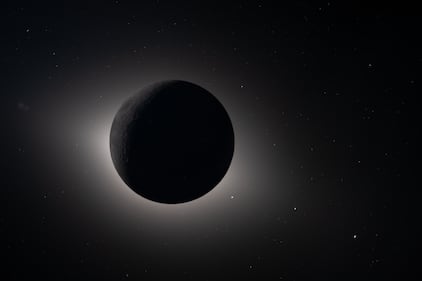
In this handout image provided by NASA, Captured by the Artemis II crew during their lunar flyby on April 6, 2026, this image shows the Moon fully eclipsing the Sun. From the crew’s perspective, the Moon appears large enough to completely block the Sun, creating nearly 54 minutes of totality and extending the view far beyond what is possible from Earth. (NASA via Getty Images)
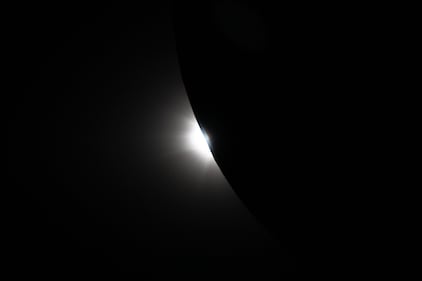
In this image provided by NASA, the Artemis II crew captured this image of the Sun beginning to peek out from behind the Moon as an eclipse transitions out of totality during a lunar flyby, Monday, April 6, 2026. (NASA via AP)
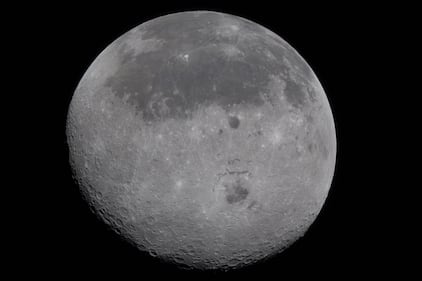
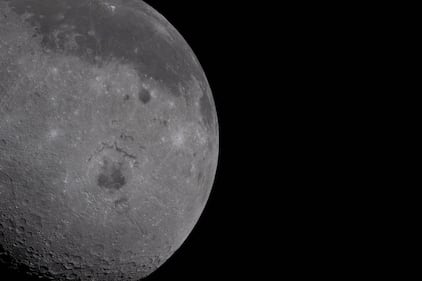
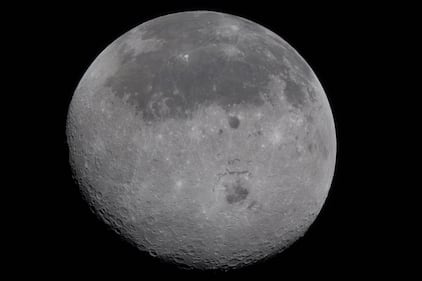
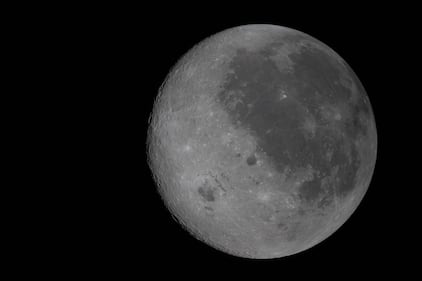
This image provided by NASA Monday, April 6, 2026, shows the Moon, the near side (the hemisphere we see from Earth) visible at the top half of the disk, identifiable by the dark splotches. At the lower center is Orientale basin, a nearly 600-mile-wide crater that straddles the Moon’s near and far sides. Everything below the crater is the far side. (NASA via AP)
In this image provided by NASA, the Artemis II crew captured this image of the Orientale basin, a round crater with a black patch in the center, on the Moon during a lunar flyby, Monday, April 6, 2026. (NASA via AP)
In this image provided by NASA, the Artemis II crew captured this image of the Orientale basin, a round crater with a black patch in the center, on the Moon during a lunar flyby, Monday, April 6, 2026. (NASA via AP)
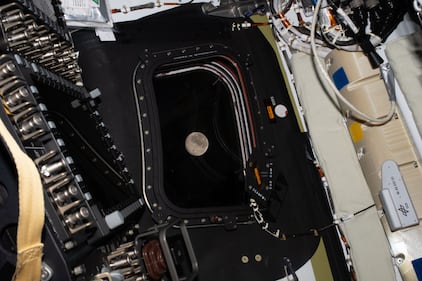
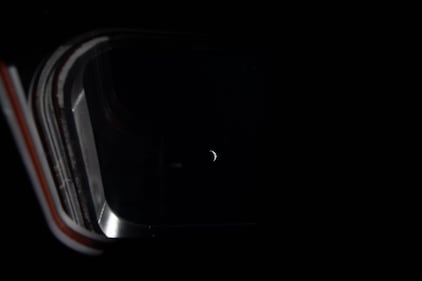
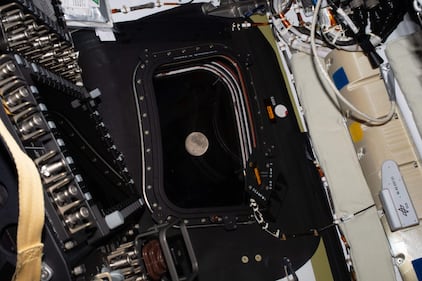
In this photo provided by NASA, the Moon is seen in the window of the Orion spacecraft, photo taken by The Artemis II crew, at the end of day 5 of journey to the Moon on Monday, April 6, 2026. (NASA via AP)
In this image from video provided by NASA, the Moon is seen from a camera outside the Orion Spacecraft after the Artemis II astronauts surpassed the farthest distance ever travelled by humans from Earth, Monday, April 6, 2026. (NASA via AP)
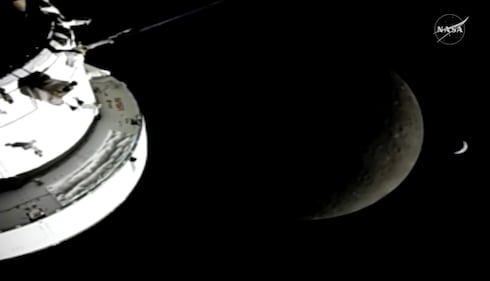
In this image from video provided by NASA, the Moon is seen from a camera outside the Orion Spacecraft as the Artemis II astronauts acknowledge the Apollo 13 astronauts as the crew and spacecraft surpass the farthest distance ever travelled by humans from Earth, Monday, April 6, 2026. (NASA via AP)
In this image from video provided by NASA, the Orion Spacecraft, the Earth and the Moon are seen from a camera as the Artemis II crew and spacecraft travel farther into Space, Monday, April 6, 2026. (NASA via AP)
This photo provided by NASA shows the Earth seen from a window on the Orion spacecraft Integrity during the Artemis II mission, Sunday, April 5, 2026. (NASA via AP)
This image provided by NASA Monday, April 6, 2026, shows the Moon, the near side (the hemisphere we see from Earth) visible at the top half of the disk, identifiable by the dark splotches. At the lower center is Orientale basin, a nearly 600-mile-wide crater that straddles the Moon’s near and far sides. Everything below the crater is the far side. (NASA via AP)
This image provided by NASA on Monday, April 6, 2026, shows a view of the moon taken by the Artemis II crew before going to sleep on flight day 5. (NASA via AP)
This image provided by NASA Monday, April 6, 2026, shows the Moon, the near side (the hemisphere we see from Earth) visible at the right side of the disk, identifiable by the dark splotches. At lower left is Orientale basin, a nearly 600-mile-wide crater that straddles the Moon’s near and far sides. Everything to the left of the crater is the far side. (NASA via AP)
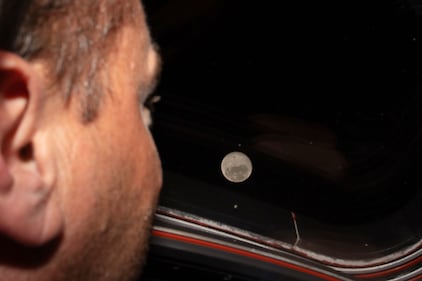
In this photo provided by NASA, Artemis II commander and NASA astronaut Reid Wiseman looks out one of the Orion spacecraft's main cabin windows at the Moon ahead of the crew's lunar flyby on April 6, 2026. (NASA via AP)