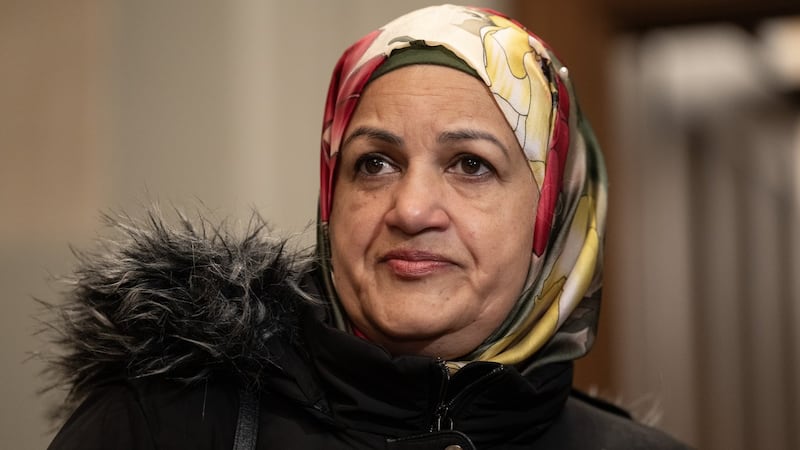
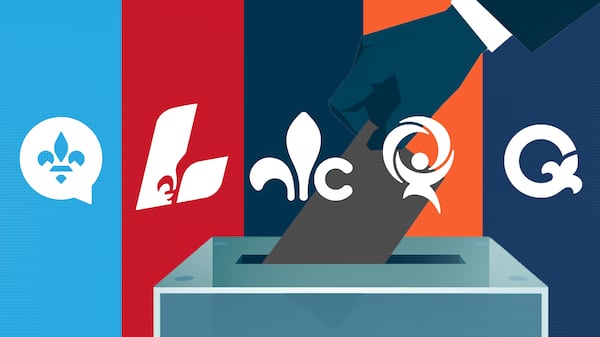
For Maggie Chittspattio, Orange Shirt Day is about more than remembering what happened to Indigenous children in Canada’s residential school system. It is also about what happens next. Chittspattio’s mother was taken from her family and community and forced to attend a residential school when she was five years old. Chittspattio, who works as an intervention and community program coordinator at Resilience Montreal, said she wants to break that cycle of harm. “It’s something very special to me,” she said. “It’s something that I would like to break for my kids and future generations.” Hundreds of people gathered in Montreal on Wednesday for the annual Every Child Matters event, which included a march and speeches marking the National Day for Truth and Reconciliation, also known as Orange Shirt Day. The event, organized by Resilience Montreal and the Native Women’s Shelter (NWS) of Montreal, took place just days before Quebecers head to the polls on Oct. 5. For Chittspattio, recognizing Indigenous people in Quebec has to be part of that conversation. “If you’re a leader, you’re a leader, and you should always include us, as Indigenous people in the province of Quebec. We’re still here and, if you want our help, help us in return.” Remembering the residential school system Orange Shirt Day honours residential school survivors and victims, and recognizes the ongoing effects of a system that separated an estimated 150,000 Indigenous children from their families and communities. Across Canada, the residential schools children were forced to attend were government-funded and largely operated by churches. The last federally run residential school closed in Saskatchewan in 1996. Kahsennenhawe Sky-Deer, former grand chief of the Mohawk Council of Kahnawà:ke, said the effects of trauma experienced by children continue to be felt today. “There are still the residual impacts of the sexual abuse, the physical abuse, and the violence that children suffered. How do people expect [survivors] to be normal, functioning adults in their lives when that was what their formative years were about?” She said understanding those impacts requires people to consider how they would feel if the same experiences had happened to someone close to them. “What if that was you? What if that was your child or your grandchild?” she said. “Those impacts permeate and it’s a cyclical thing, but it’s up to us to be cycle breakers.” Sky-Deer said racism and stereotypes against Indigenous people also continue to be issues. She said greater public education about residential schools is still needed, noting that broader efforts to unpack that history have only increased in recent years, namely following the Truth and Reconciliation Commission’s work. The commission released its final report in 2015, including 94 Calls to Action. The National Day for Truth and Reconciliation was established in response to Call to Action 80. Calls for action from the next government With the provincial election days away, advocates say they want the next government to move beyond statements and engage directly with Indigenous communities. “Please reach out to Indigenous organizations, communities and residential school survivors,” said Native Women’s Shelter of Montreal executive director, Na’kuset. “Why aren’t we sitting at the table? How come you haven’t called us for consultation?” She also wants governments to outline concrete plans for implementing recommendations from the Truth and Reconciliation Commission, the National Inquiry into Missing and Murdered Indigenous Women and Girls, and Quebec’s Viens Commission. Na’kuset said that plea extends beyond Quebec to governments at the municipal, federal, provincial and territorial levels. For Sky-Deer, the hope is that whoever forms Quebec’s next government will build stronger relationships with the communities in the province, which includes 11 nations and 55 communities. She also identified policing and security services in First Nations communities as an area requiring attention. “Why should our people have any less security in our communities?” said Sky-Deer. “We all need to have peace and security — to know that there’s people there that are going to help to restore peace among our people.” ‘Fund the organizations that are doing the work’ Beyond campaign promises, Na’kuset, who only uses one name, also pointed to the needs of non-profit organizations serving Indigenous people. “Everyone who walks through our doors [at the NWS] is either residential school or intergenerational. Everyone has been affected,” she said. She pointed to Indigenous people being significantly overrepresented among Montrealers experiencing homelessness. According to a report by the Montreal Indigenous Community Network released in 2024, Indigenous peoples make up approximately 12 per cent of the city’s unhoused population, despite only making up 0.6 per cent of its total population. “Our people are leaving their communities, coming to Montreal, trying to find a better way of life — but falling through the cracks and going to organizations that don’t have enough money,” said Na’kuset. “Fund the organizations that are doing the work because you’re not doing the work. We are happy to do it, but you need to help us.” There’s also more work to be done for people who are not Indigenous, noted Sky-Deer. “Find out whose territory you live on and go and learn about those people.” For those in and around Montreal, she pointed to the newly opened Kanatahkwèn:ke Cultural Arts Center as one opportunity for people to learn more about the community, its history and its contributions. “Go out and make some friends, make acquaintances, build relations, and hopefully things will get better,” added Sky-Deer. The message echoed through Wednesday’s march as participants carried signs and chanted for a better future and for the children who never returned home. For those who attended, the day was both a commemoration and a reminder that the effects of the residential school system continue to shape Indigenous people today.