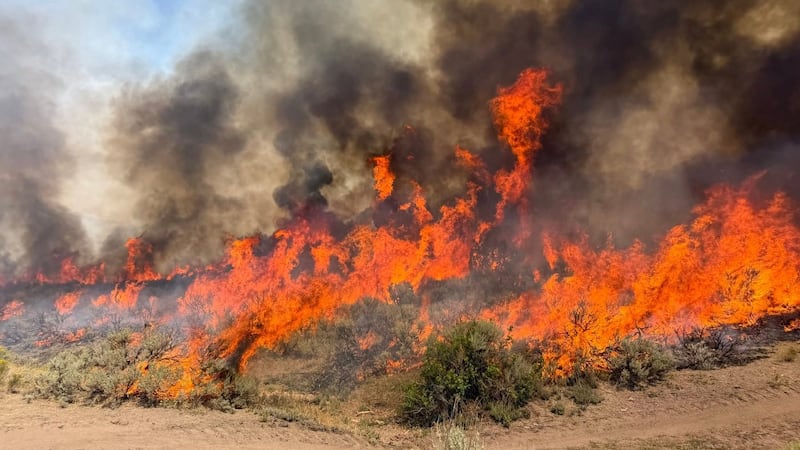
VANCOUVER – There is finally some good news for thousands of British Columbians forced from their homes by wildfires: cooler conditions and thick smoke blanketing the province’s southeast are helping firefighters gain ground. The BC Wildfire Service says dense smoke has reduced fire activity on Bradley Creek Complex near Vernon, B.C., where the wildfire has destroyed more than 200 homes and forced thousands of people to evacuate. “The smoke coverage is really reducing the ability for these fires to pick up any steam and really start going,” said Morgan Blois an information officer at the BC Wildfire Service. The wildfire service says a lower-than-expected threat of lightning for the weekend is also playing a role in an improved outlook. Officials are now discussing when some evacuation orders could be downgraded or lifted. “We are assessing areas where, from a wildfire perspective, it may be safe to allow residents back into the area and downgrade orders to alerts and potentially rescind alerts altogether,” Morgan said. But she cautioned that wildfire conditions are only one part of the equation. Before people can safely return communities must also have danger trees and debris cleared, power restored and be able to access clean drinking water. While smoke has helped firefighters on the ground, it is having a dangerous effect on air quality across southeastern B.C. Smoke from more than 100 wildfires in B.C., along with fires in Washington state, has pushed air quality health risks to the highest level in some areas. Health officials are advising children, older adults and others at higher risk to limit time spent outside. “It’s definitely affected my hiking, so I’m just doing a short walk today,” said one Kelowna, B.C. resident. “Not great.” Calgarian Jed Kaplan is vacationing in Kaslo, B.C. along the shores of Kootenay Lake, where distant landmarks have disappeared in the haze. “It smells like a campfire. Right now, it’s just hard to see. The sun is kind of dim,” he said. Kaplan, a climate researcher who teaches at the University of Calgary, told CTV News researchers do not fully understand the damage continuous exposure to wildfire smoke could be having on Canadians. “We don’t really have a very clear idea of what long-term exposure to wildfire smoke is going to do for a lot of the population,” he said. Cats and dogs displaced among residents Some 7,000 properties remain under evacuation order across the province, while people in 3,500 more homes have been warned to be packed and ready to go. The wildfire is also straining B.C. animal rescue organizations. The Victoria Humane Society says it has rescued about 100 surrendered dogs and cats from fire-evacuated communities and expects several-hundred more in the coming weeks. “This weekend we’ve got another eight crates of cats and another 20 to 30 kittens on top of that coming down from places where the smoke is so bad and people are having to be ready to evacuate at any moment,” said Penny Stone with the Victoria Humane Society. “The rescues just really need to get them out, so we’re doing the best we can to help them get their animals out so they can take in more.” The organization is accepting donations to help care for the influx of animals and is also looking for foster families, particularly for larger dogs.