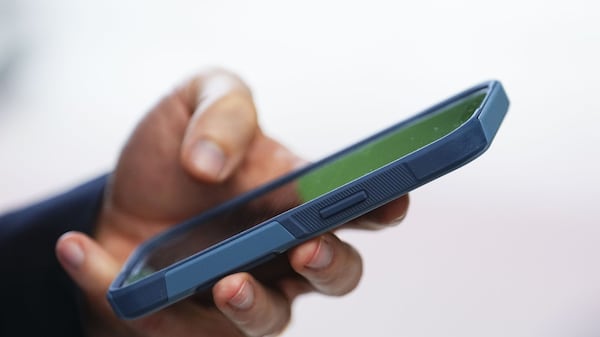
New York State Police investigators compiled over 200,000 location data points captured by smartphone apps such as Google Maps as part of their probe in the death of a nine-year-old girl from Montreal, a criminal trial heard on Thursday. One of the investigators, Ryan Munks, testified that the data was extracted from the phone of Luciano Frattolin, who faces charges of second-degree murder and of concealing a human corpse in the death of his daughter Melina Frattolin, who lived in Montreal with her mother. Frattolin, 46, pleaded not guilty to the charges and has remained in custody since his arrest in 2025, when police found his daughter’s body. He has alleged that his daughter was abducted by two men who drove off in a white van. Melina Frattolin was found drowned to death in a marsh in rural New York, at the end of her trip with her father. The case has provoked an outpouring of emotions on both sides of the Canada-U.S. border, including candlelight vigils and tributes for the girl from residents living around the New York region where she died. Munks noted that the tens of thousands of data points, which covered a weeklong period, were a larger data set than what he would typically see in an investigation. “That’s a lot. One of the most I’ve ever seen,” he said. Munks also testified that he analyzed data showing that shortly before she disappeared, the girl messaged her mother on her own phone to get in touch with one of her friends. The girl was due to return to Montreal on the same evening. He also said the data showed that Luciano Frattolin’s phone remained stationary beside a country road for about an hour, before the father called police to report his daughter was missing. In subsequent testimony, the jury heard how police tracked a silver Prius that Frattolin had rented and used for the trip. An analyst from the state police, Andrew Munson, said a team of investigators pulled data from licence-plate reading cameras to review the evidence, revealing how the Prius was captured travelling in both directions on the I-87 highway over a three-hour period on the same evening. The investigators also analyzed images of white vans using an AI tool, but did not find any information hinting at criminal activity based on further analysis of the vehicles and their registered owners, Munson said. During cross-examination of Munson, one of Frattolin’s attorneys, Brian Pilatzke, questioned the accuracy of the AI tool police used. He pointed out an instance when the tool identified the silver Prius as a blue SUV. “(Is it) fair to say that the AI isn’t there yet?” asked Pilatzke. He also asked Munson whether there were ways to evade detection by a licence plate reader, such as obscuring or removing the licence plate. Munson confirmed this was possible. The jury was also able to view copies and images of several documents and material found in the vehicle Frattolin was driving. Jacalyn Sommer, an investigator in the forensic identification unit of the state police force, testified that officers seized the material after searching the vehicle. Sommer said one of those documents appeared to consist of a dialogue between Frattolin and the girl’s mother. It was unclear whether the dialogue, labeled “Closure/Confession,” was fictional or referred to a real conversation. In the written dialogue, Frattolin appeared to make accusations and other disparaging remarks targeting the girl’s mother. The trial is scheduled to resume on Friday. This report by The Canadian Press was first published July 30, 2026. Marieke Glorieux-Stryckman, The Canadian Press