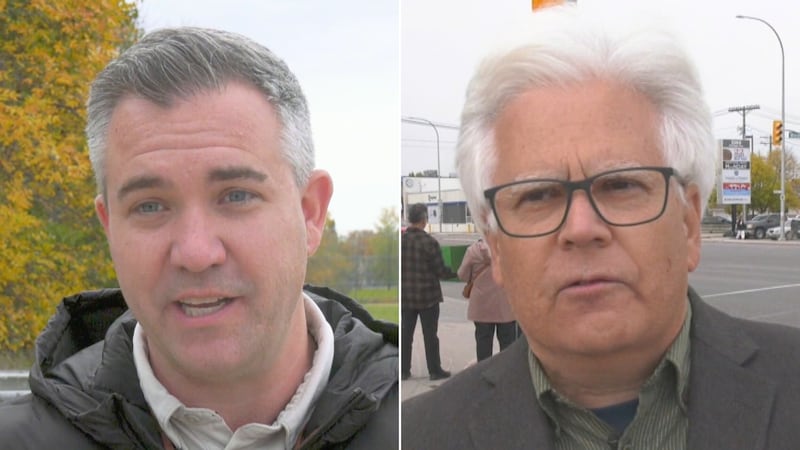
Former Alberta premier Jason Kenney is questioning why the province is taking oil and gas off the table in the high-stakes tariff war with the United States. Kenney, in an interview Tuesday, said Canada has the power to really put the squeeze on the U.S. through oil and gas exports. “You don’t deal with an aggressive attack on your economy by starting with listing all the things you will not do in reprisal by limiting your options, by weakening your position. That makes no sense,” he said. He said cutting off exports isn’t feasible, partly because central Canada relies on oil shipped through the U.S. But he said the Americans would be extremely sensitive to export taxes on things like fuel and potash amid a cost-of-living crisis. “(That) would affect Republicans who drive F-150s and lay fertilizer on their farm fields,” he said. “They should be mindful that if they really want to escalate, it will not end well for the American economy two months before mid-term elections.” Kenney said he’s only suggesting export taxes be levied if the administration intensifies its threats — but the possibility ought to be signaled. “Let it be known we’re prepared to defend ourselves.” His comments come as Prime Minister Mark Carney’s government has announced a string of counter-tariffs to battle punishing U.S. import fees on about $28 billion worth of Canadian goods. Premier Danielle Smith has long asserted that oil and gas will not be part of the fight. She has said cutting off energy exports would end up hurting Canadians and deprive Canada of money it could use to buttress other sectors that will feel the brunt of U.S. President Donald Trump’s tariffs. In a statement Tuesday she said counter-tariffs increase costs, and hurt businesses and workers. “We should do all we can to avoid further escalation,” she said. She’s urging the federal government to get back to the negotiating table with the U.S. Other premiers have said now is the time to fight Trump with every economic tool at their disposal. Earlier this week, Ontario Premier Doug Ford pointed to areas in which Canada can inflict pain south of the border, including through its oil, potash and uranium exports. He said he’s willing to cut off Ontario’s electricity and critical mineral supplies to the U.S. But he said he can’t do it alone. “I need every premier playing on team Canada.” On Tuesday, Alberta Opposition NDP Leader Naheed Nenshi said Smith has played into Trump’s hands. “Her loyalties are at best divided. Every action she takes publicly strengthens the bargaining position of the United States and of Donald Trump,” Nenshi said. Nenshi said nobody wants the province to turn off the oil taps to the U.S., but said Smith’s move to publicly dismiss the possibility was “incredibly foolish.” The premier’s office declined to respond directly to the remarks from Kenney and Nenshi. However, Jobs Minister Joseph Schow criticized the NDP leader in a statement on social media, saying potentially risking 140,000 jobs in the oil and gas industry is foolish. “The families whose livelihoods depend on the jobs in this industry deserve certainty that their government has their back and is not threatening to shut them down,” Schow wrote. Provincial statistics peg the value of Alberta’s oil exports to the U.S. in 2025 at close to $111 billion — representing much of the province’s nearly $177 billion worth of all global exports. The province’s budget is perennially tied to oil royalties and the boom-and-bust cycles of global energy markets. So far, Alberta’s oil and gas exports to the U.S. have dodged Trump’s tariffs. Nenshi said Smith’s government appears to hope that Trump leaves oil and gas alone while ignoring the impacts of his threats on other industries at home and in other provinces. He called on Smith to immediately reinstate the province’s ban on American booze. “There’s no cost to the Canadian economy. The only cost is to Danielle Smith’s pride,” he said. Most Canadian provinces have long curtailed U.S. alcohol on their shelves in response to earlier tariff fights with the Trump administration. But Saskatchewan and Alberta, despite brief booze bans, have chosen to keep American products on the shelves. On the weekend, Smith said she won’t be shifting the province’s booze policy and will leave it up to consumers. “We believe also in choice,” she said. “We trust that Albertans can make their own decisions, so we won’t be going down that track.” This report by The Canadian Press was first published Aug. 25, 2026. -- With files from Lisa Johnson and Jack Farrell in Edmonton